
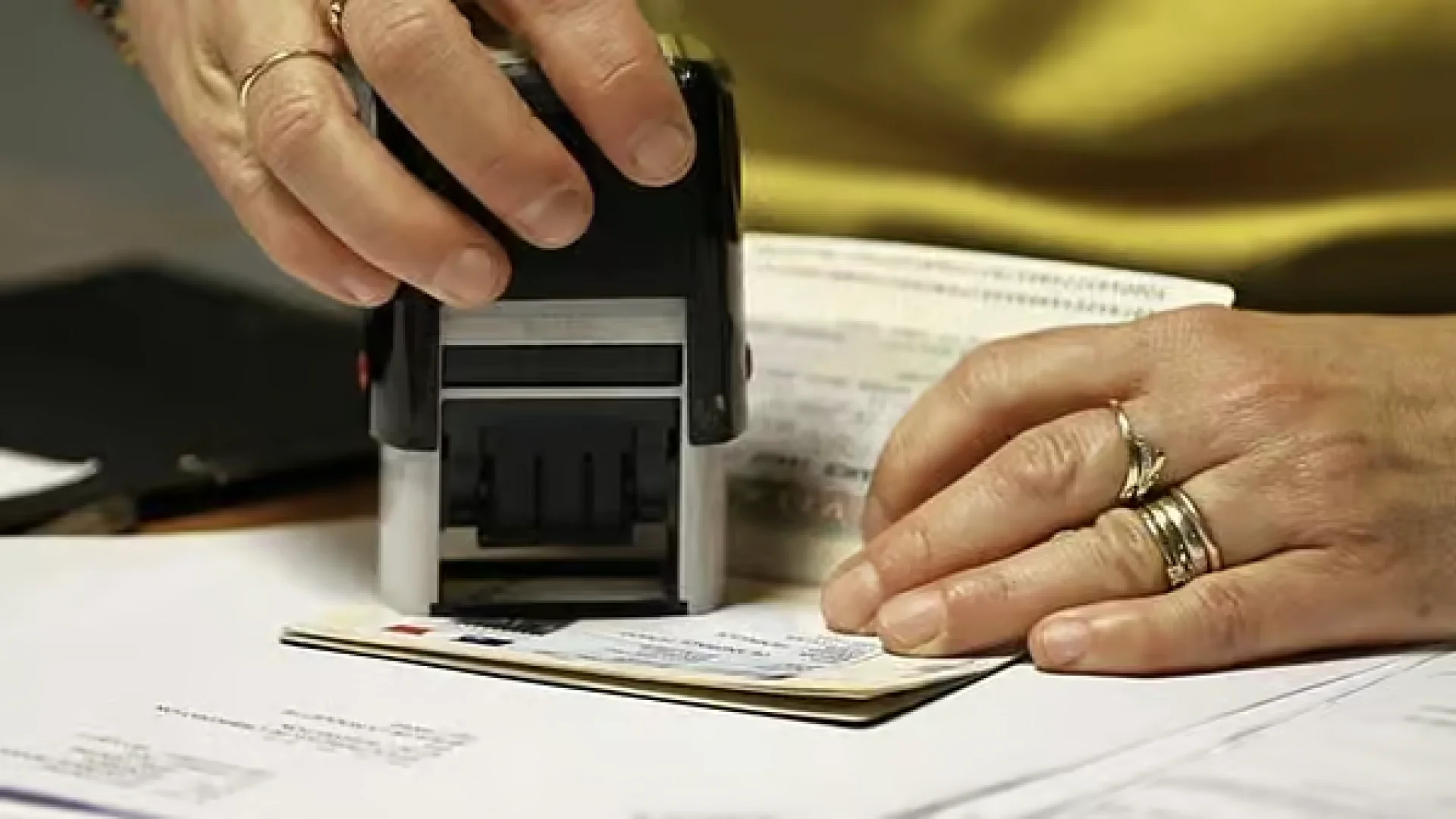

Dubai’s long-stay story just got a new headline number: authorities say more than 160,000 Golden Visas have been issued to families. Behind the figure are households turning a posting into a home—school registrations, multi-year leases, and the kind of buying decisions people make only when they believe they’ll still be here later. The Golden Visa programme has become a powerful draw for investors, entrepreneurs, skilled professionals and top talents looking for stability and a clear runway. For the property market, it’s a signal that demand is increasingly driven by permanence, not just speed.
The evening heat loosens its grip in tiny increments. Outside, the city glows—headlights, glass towers, the last pale strip of sky fading behind cranes. Inside an air-conditioned service hall, a family stands in that familiar, slightly awkward formation: too close for comfort, too tight to break the spell. Passports in hand. A folder of documents. A child craning their neck to read the screen.
“So… we can stay?” the child asks, half-whisper, half-dare.
The father glances at the mother. She nods once, decisively. “We can stay.”
Dubai has always been good at arrivals. But now it is mastering something quieter: staying. According to statements cited in local reporting, more than 160,000 Golden Visas have been issued to families in Dubai. Not just to individuals chasing a contract or a promotion—families. The unit of real life. The people who bring lunchboxes and bedtime routines, who measure a neighbourhood by its school run and its shade.
The Golden Visa is not merely an administrative upgrade. It is a psychological switch. In cities built on movement, a long-term residency option changes the way people walk through a doorway. They stop scanning for the exit.
Dubai’s Golden Visa framework is designed to attract and retain people who add value—investors, entrepreneurs, highly skilled professionals, and a broader circle of specialised talent. And when the visa extends across the family, the impact multiplies. A new job becomes a new address. A two-year plan becomes a five-year calendar. The question is no longer “How fast can we settle?” but “How well can we live?”
Numbers can feel sterile until you imagine what they contain. More than 160,000 family Golden Visas implies thousands upon thousands of decisions that only make sense when people believe in continuity.
It looks like this:
That’s what long-term residency produces: a thicker kind of demand. It’s not just demand for space—it’s demand for fit.
Talk to residents and you hear the language shift. The city used to be described in seasons: “We’ll try Dubai for a bit.” Now the sentences stretch longer. “We’re thinking of staying through high school.” “My parents might visit for months.” “We’re looking at communities, not just buildings.”
In a coffee shop where the barista already knows the order, a mother scrolls through listings on her phone. “We started with a one-bedroom,” she says, almost laughing at the memory. “It was fine—until it wasn’t. Now we need a second bathroom. And storage. And a place where the kids can ride their scooters without me holding my breath.”
These are not luxury demands. They’re permanence demands.
Family-led settlement changes a city differently than single-person mobility. A single professional may accept a compact apartment close to the office and move again next year. A family is more likely to:
That last point is the one the property market listens to most carefully. Because buying is not a transaction; it’s a declaration. People buy when they can imagine next year. And the year after that.
Global cities compete fiercely for talent and capital. They sell safety, opportunity, lifestyle, connectivity. The Golden Visa is Dubai’s way of adding an extra ingredient to the offer: time. Time to build a company. Time to build a career. Time to build a family life without the constant countdown of renewals.
And time changes behaviour. Investors think in longer horizons. Entrepreneurs hire with more confidence. Professionals invest in credentials, networks, and—very often—property.
You can feel it in the questions people ask agents. The tone is different when someone believes they might be here for a decade. They ask about school catchments, traffic at 8am, playground shade, community rules, service charges, and resale liquidity. They look at buildings the way you look at a long-term partner: not just the shine, but the maintenance.
An agent puts it bluntly: “Short-term renters want a deal. Long-term families want a life.” Then he adds, with a grin, “And once they want a life, they start asking about ownership.”
“Over 160,000” is a milestone, but it also reads like a direction of travel. It suggests an ecosystem built to keep people—not just attract them. And that has knock-on effects across housing, retail, education, healthcare, and infrastructure. Where families settle, services follow. Where services improve, more families settle. It is a feedback loop cities dream about.
Dubai has always built upward. The Golden Visa story is about building inward—into people’s plans, their calendars, their sense of belonging.
For real estate investors, the issuance of Golden Visas to families is best read as a structural demand signal. Family-based residency is “stickier” than transient migration: it tends to lengthen holding periods, stabilise leasing patterns, and support price resilience in neighbourhoods that serve day-to-day life.
Investor takeaway: “160,000+ family Golden Visas” points to a market increasingly shaped by long-term residents. For portfolios, that argues for strategies focused on livability-driven locations, family-suitable layouts, and assets that can hold value through cycles—because they match how people actually live when they decide to stay.